PerspectivesSeptember 15, 20252 min read
Are Vertiports Real Estate Assets or Aviation Infrastructure?
Vertiport investment depends on more than location and demand. Airspace, operational capacity, regulation and infrastructure ultimately determine whether a site can create value.
Are Vertiports Real Estate Assets or Aviation Infrastructure?
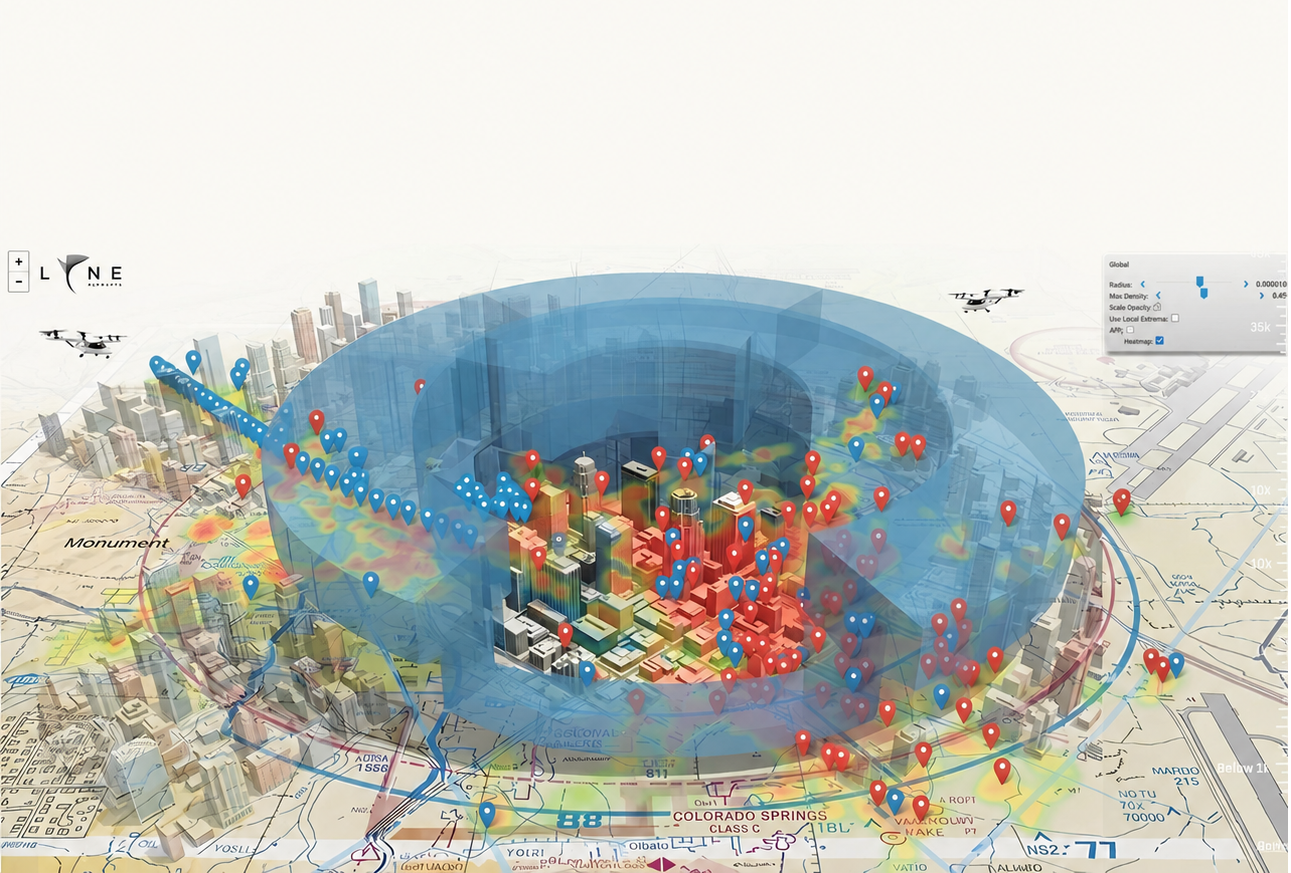
A quiet assumption is beginning to shape early Advanced Air Mobility investment: Vertiports are a real estate play. Secure the property. Build the infrastructure. Capture the demand. The logic is understandable. Traditional airports generate significant value from terminals, parking, retail, advertising and surrounding development. But vertiports may behave differently. They are smaller, faster-moving and often far more constrained by their operating environment. A site can have the right location, strong passenger demand, available capital and a viable building, yet still fail as aviation infrastructure. Because the critical constraint may not be the property. It may be the airspace above it.
In aviation, operational feasibility creates land value
Most real estate decisions begin with the land and work outward. Aviation often works in the opposite direction. Airspace, obstacles, procedures, surrounding traffic and operational restrictions determine what a site can support. Those constraints then determine capacity, and capacity directly influences revenue potential. This creates an important inversion: In many asset classes, land value influences feasibility. In aviation, operational feasibility can define land value. Demand analysis alone therefore tells only part of the story. Passenger flows, travel patterns and willingness to pay may identify an attractive market, but they do not determine how much aviation activity the site can actually support. A corridor may contain significant potential demand. If operational constraints severely limit aircraft movements, usable operating hours or available approach paths, the economics change quickly. Noise restrictions, curfews and community considerations can reduce capacity further. Demand matters, but only demand that can be served operationally can become revenue.
Airspace and real estate can no longer be planned separately
Vertiports are expected to operate inside dense urban environments. That means ground infrastructure and aviation operations increasingly need to be designed together. Building height, site geometry, passenger throughput and infrastructure requirements influence aviation feasibility. Approach paths, obstacle clearance, safety areas and operating procedures influence what can be built on the ground. The traditional sequence, where real estate, architecture, engineering and aviation are considered separately, becomes increasingly difficult to sustain. Each decision affects the others. At LYNEports, we often find that the limiting factor is not necessarily demand, capital or available land. It is whether the different requirements can be aligned into an infrastructure asset that can actually operate at a meaningful scale. That distinction matters for developers and investors. The opportunity around vertiports may be significant, but their value cannot be assessed using real estate logic alone. Perhaps the better question is not whether a vertiport is a property asset or an aviation asset. It is whether the property can become valuable because aviation can operate there.