Company NewsSeptember 23, 20263 min read
LYNEports Brings an Infrastructure Perspective to European Commission Expert Group Discussions
Rasha Alshami participated in the European Commission’s Expert Group on Drones and Innovative Air Mobility in Brussels, bringing LYNEports’ infrastructure and deployment perspective to the discussions.

LYNEports Brings an Aviation Infrastructure Perspective to European Commission Expert Group
On September 22, 2026, Rasha Alshami, CEO & Managing Director of LYNEports, participated in the European Commission’s Expert Group on Drones and Innovative Air Mobility in Brussels.
Rasha brought LYNEports’ infrastructure and deployment perspective to the conversation: aircraft readiness needs to be considered alongside the readiness of the locations, infrastructure and organisations that will support operations.
The perspective outlined below reflects LYNEports’ own approach to aviation infrastructure planning and site readiness.
Aviation readiness extends beyond the aircraft
Aircraft development is an essential part of new aviation services. At LYNEports, we consider the practical conditions around deployment equally important.
A technically capable aircraft still needs suitable places to operate. Those locations need to be assessed in relation to airspace, surrounding obstacles, access, utilities, operating requirements and the applicable approval pathways.
These considerations apply across drone infrastructure, heliports, vertiports and airports, although the requirements differ by aircraft, operation and location.
Our view is that infrastructure planning should begin early enough to inform project decisions. It can help establish which opportunities warrant further work, which constraints require specialist assessment and where a different site or operating concept may be needed.
Site readiness is specific to the intended operation
Aviation site readiness is more than a question of available space.
A location may appear promising on a map while presenting challenges for approach and departure, ground access, energy supply or its relationship with neighbouring activities. The intended frequency of operations and the aircraft’s requirements can also affect the infrastructure needed.
For developers, airports and infrastructure owners, the useful questions are practical:
What type of operation is being considered?
What physical and operational constraints affect the site?
Which permissions and further assessments would be required?
What infrastructure would need to be provided?
How would the facility connect with existing transport and surrounding land uses?
Early assessment helps make these questions visible while a project can still adapt. It supports subsequent engineering and regulatory work by clarifying what needs attention.
Connecting policy with local and regional implementation
From LYNEports’ perspective, aviation deployment requires coordination across several levels.
European and national frameworks provide important context. Individual projects must also address the responsibilities and requirements of aviation authorities, air navigation service providers, local and regional authorities, infrastructure owners and operators.
Local and regional authorities bring knowledge of land use, transport connections, public services and community priorities. Airports and operators bring an understanding of aviation activity and operational needs. Developers and asset owners contribute knowledge of the site, its investment plans and the infrastructure under their control.
Involving the relevant organisations early can help clarify responsibilities, identify dependencies and establish a realistic sequence for further work. The appropriate approach will vary between locations and projects.
Planning for repeatable operations
A demonstration and a recurring aviation service place different demands on infrastructure.
Repeatable operations require consideration of how a facility will function over time, including energy provision, maintenance, emergency access, operating procedures and connections with the surrounding transport network.
Commercial considerations also belong in this assessment. Infrastructure needs, operating assumptions and phased investment affect whether a proposed service has a workable basis for development.
For innovative air mobility and drone deployment, our focus is on understanding these conditions together. This helps teams evaluate an opportunity in the context of the wider system that would support it.
Bringing practical deployment experience to the conversation
Rasha’s participation in the Expert Group reflects LYNEports’ continued engagement with aviation infrastructure and implementation questions.
The view she brought is informed by the company’s work across site readiness, airspace feasibility and aviation planning: progress depends on connecting aircraft capabilities with suitable locations, practical infrastructure requirements and clearly understood responsibilities.
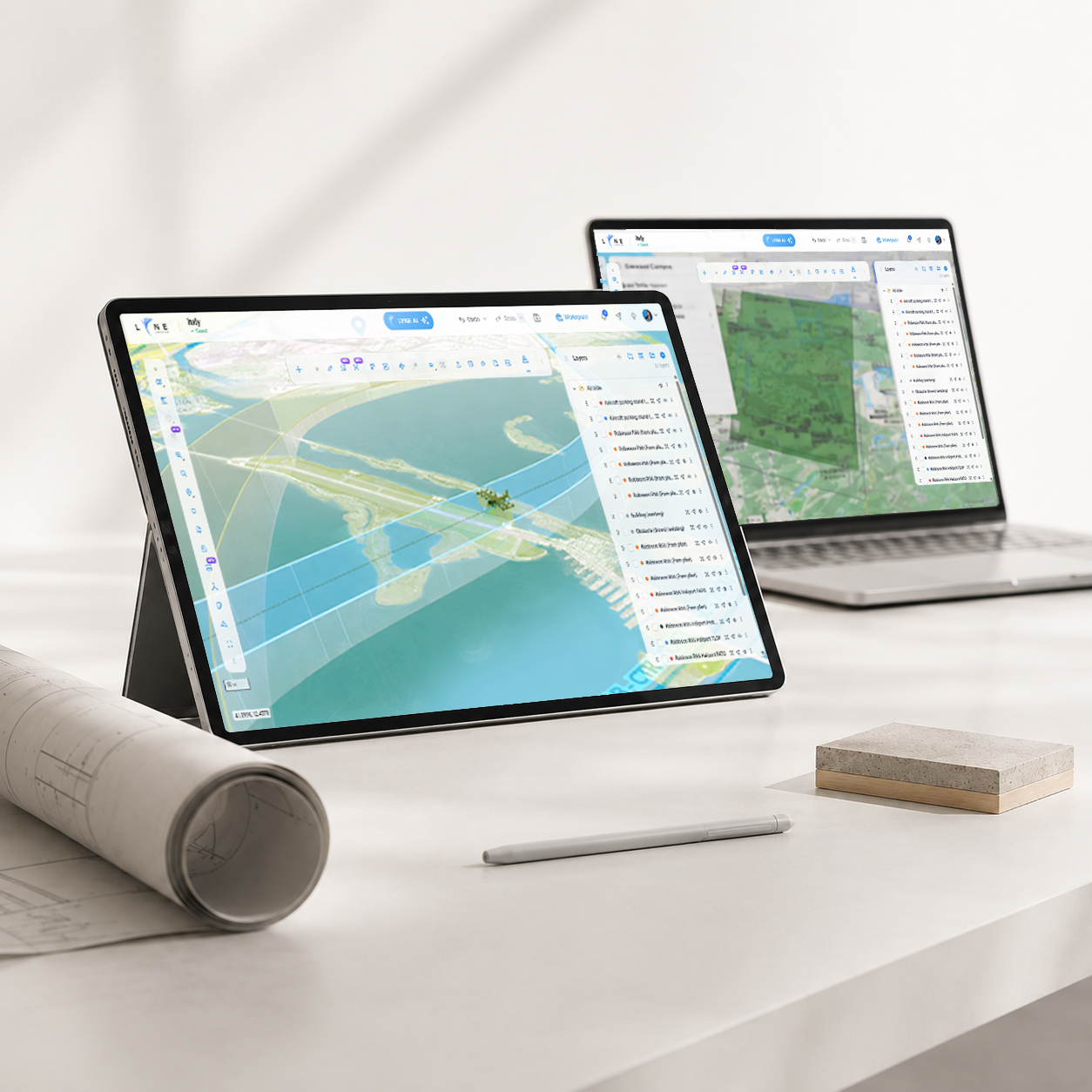
Through its advisory work and planning technology, LYNEports supports airports, developers, authorities and infrastructure owners in examining those connections and identifying the next questions a project needs to resolve.
Explore LYNEports’ aviation infrastructure planning platform
Learn about AirWorthy Readiness for aviation site assessment