Company NewsNovember 10, 20265 min read
LYNEports Leads UITP's Urban Air Mobility Training with Dubai RTA: AAM & Vertiport Planning
LYNEports shares expertise in vertiport planning, AAM infrastructure and regulatory readiness at UITP's Urban Air Mobility training with Dubai RTA.
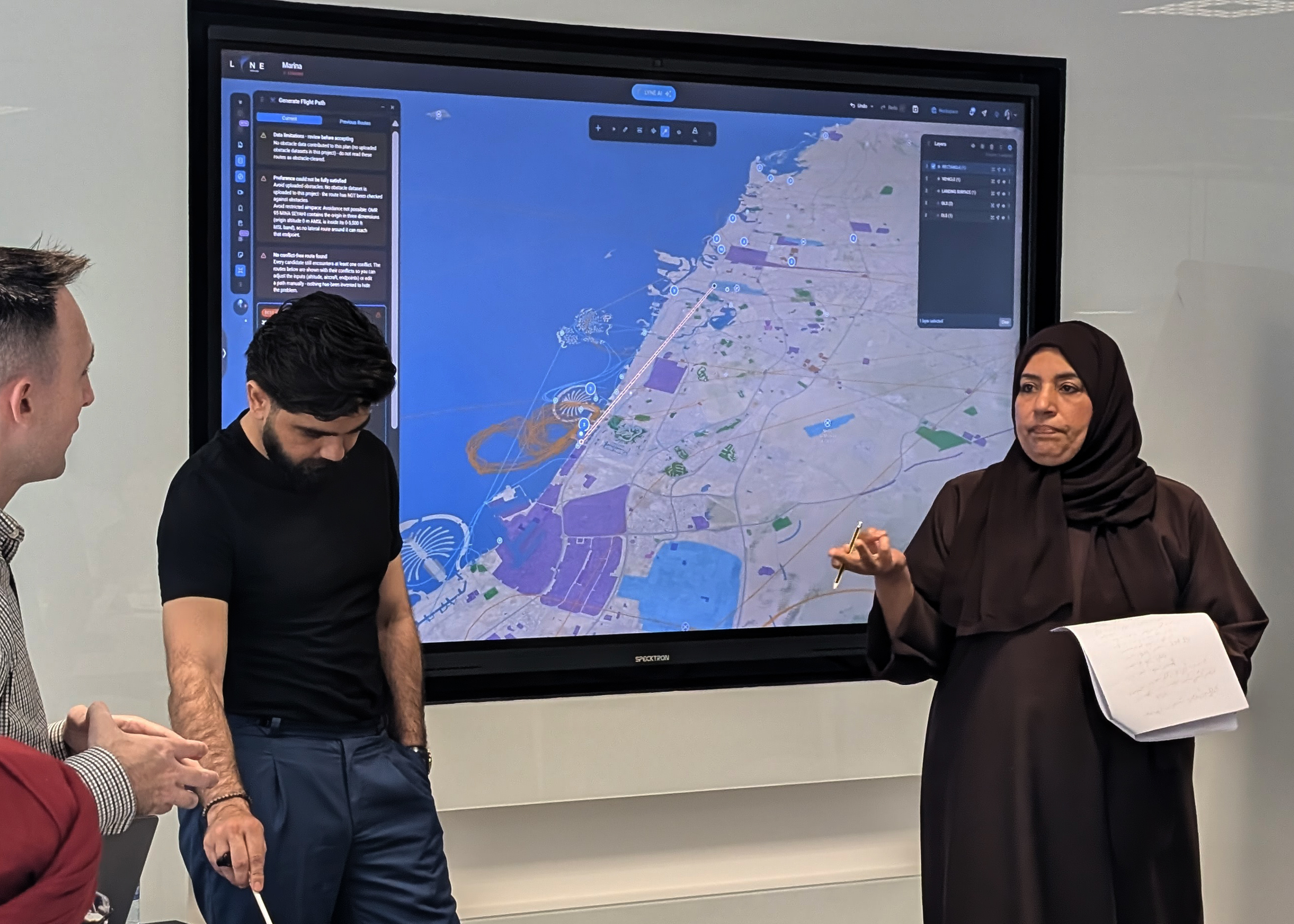
In November 2026, LYNEports contributed to the UITP Urban Air Mobility training programme in Dubai, sharing expertise in advanced air mobility (AAM), vertiport planning, aviation infrastructure and regulatory readiness with professionals from Dubai's Roads and Transport Authority (RTA).
Held at Dubai CommerCity from 9 to 12 November, the programme brought together transport professionals and aviation industry specialists to examine how urban air mobility can be integrated into existing transport systems.
Rasha Alshami, CEO & Managing Director of LYNEports, contributed insights drawn from international airport infrastructure and emerging aviation projects, with a focus on the practical requirements of planning, evaluating and delivering AAM infrastructure.
The sessions also included a demonstration of LYNEports' digital infrastructure planning platform, illustrating how technology can support early-stage vertiport feasibility assessments and infrastructure development decisions.
Why infrastructure readiness matters for Advanced Air Mobility
Advanced Air Mobility offers opportunities to introduce new aviation services into cities and regional transport networks. However, moving from an AAM strategy to operational services requires careful consideration of infrastructure, airspace, regulations and urban integration.
For transport authorities, airports and developers, one of the earliest challenges is determining where suitable vertiport infrastructure can be developed.
A promising location must be assessed against several interconnected requirements:
Site feasibility: Available land, surrounding buildings, physical constraints and opportunities for future expansion.
Airspace integration: Approach and departure paths, obstacle environments and compatibility with existing aviation operations.
Aircraft requirements: Performance characteristics, operational assumptions, ground handling and supporting infrastructure.
Energy and charging: Electrical infrastructure requirements and potential implications for site development.
Urban transport connectivity: Passenger access, interchange opportunities and integration with existing mobility networks.
Regulatory readiness: Applicable aviation requirements, approval pathways and coordination with responsible authorities.
These considerations are essential to understanding whether a proposed vertiport location can progress from an initial concept to a feasible infrastructure project.
During the UITP training, LYNEports emphasised the value of identifying these requirements early, before significant resources are committed to detailed design or development.
Applying international aviation experience to vertiport planning
Urban Air Mobility introduces new aircraft technologies and operating models, but many of its infrastructure challenges build on established aviation principles.
Airport planning, airspace compatibility, operational safety and regulatory compliance remain central to infrastructure development.
At LYNEports, our work combines experience in international airport infrastructure with specialist knowledge of vertiport planning and emerging aviation operations.
During the training, LYNEports shared perspectives on AAM policy and regulatory developments, highlighting how regulatory requirements and operational assumptions influence infrastructure planning.
The discussions explored the relationship between site selection, aircraft capabilities, obstacle limitations and the surrounding urban environment.
For cities considering AAM deployment, this means evaluating infrastructure as part of a wider operational and transport system rather than treating individual vertiport locations as isolated developments.
The same approach is relevant to airports, property developers and infrastructure owners assessing opportunities to accommodate new aviation services.
Digital vertiport planning and early-stage feasibility assessments
An important part of the programme was the demonstration of LYNEports' digital planning technology and software.
The platform supports early-stage aviation infrastructure assessments by bringing together spatial information, technical planning considerations and development scenarios.
During the workshop, participants explored how digital tools can help assess potential infrastructure locations, identify constraints and examine alternative planning assumptions.
For authorities and developers, these capabilities can support more structured discussions around infrastructure feasibility and investment priorities.
Digital vertiport planning can help answer practical questions, including:
Which candidate locations warrant further technical investigation?
What physical and aviation constraints may affect a proposed site?
How might different aircraft assumptions influence infrastructure requirements?
What additional studies or regulatory coordination may be needed before development?
How can alternative infrastructure scenarios be compared during early planning?
Digital assessments do not replace detailed engineering, operational validation or regulatory approvals. Their value lies in helping project teams recognise limitations, document assumptions and make more informed decisions at an earlier stage.
For LYNEports, combining aviation expertise with practical digital tools is an important part of helping organisations progress from initial AAM concepts towards technically grounded infrastructure strategies.
Integrating Urban Air Mobility into existing transport networks
Urban Air Mobility infrastructure must also function within the wider city.
For public transport authorities, introducing new aviation services raises questions about accessibility, passenger movement, interchange facilities and the relationship between air services and established transport modes.
Vertiport planning therefore requires coordination across aviation, urban development and surface transport.
A technically suitable site may still face challenges if passengers cannot access it efficiently or if its development conflicts with surrounding land uses and transport infrastructure.
During the programme, discussions considered how emerging aviation services could complement existing mobility networks and the importance of involving relevant stakeholders early in the planning process.
For cities such as Dubai, where transport innovation and infrastructure development are closely connected, understanding these relationships is an important part of assessing future AAM opportunities.
Building AAM expertise through technical workshops and knowledge transfer
Beyond infrastructure development, Advanced Air Mobility requires organisations to build the technical capabilities needed to evaluate proposals and manage implementation.
Public authorities, airports and developers need more than a general understanding of emerging aircraft technologies. They must also understand how infrastructure requirements, aviation regulations and operational constraints affect project decisions.
Specialist AAM training and technical workshops can help organisations develop this capability.
Through practical scenarios, technical discussions and demonstrations, participants can explore how aviation requirements translate into real infrastructure planning decisions.
At LYNEports, we see knowledge transfer as an important part of supporting the development of the AAM industry.
Our approach combines international aviation infrastructure experience, regulatory knowledge and digital planning tools to support organisations at different stages of their AAM journey.
This includes tailored workshops on vertiport site selection, infrastructure feasibility, airspace integration, regulatory readiness and AAM implementation planning.
The UITP programme in Dubai provided an opportunity to contribute this experience to transport professionals working at the intersection of aviation and urban mobility.
Connecting with aviation and infrastructure partners in Dubai
Alongside the training programme, the visit provided opportunities for LYNEports to reconnect with partners, clients and industry colleagues across Dubai.
Discussions focused on emerging opportunities in advanced air mobility, the practical challenges of infrastructure development and the importance of coordination between public authorities, aviation stakeholders and private-sector organisations.
These exchanges reinforce the value of collaboration in translating emerging aviation concepts into feasible projects.
AAM infrastructure development requires contributions from multiple disciplines, including aviation planning, engineering, regulatory affairs, urban development and transport operations.
Bringing these perspectives together early can support more realistic planning assumptions and stronger foundations for implementation.
Supporting cities, airports and developers with AAM planning and training
LYNEports thanks the International Association of Public Transport (UITP), Dubai's Roads and Transport Authority (RTA), the programme organisers, fellow trainers and participants for the opportunity to contribute to the Urban Air Mobility training programme.
As Advanced Air Mobility continues to develop, organisations will need the technical expertise, planning tools and institutional capabilities required to assess opportunities responsibly.
LYNEports supports this process through vertiport feasibility studies, aviation infrastructure planning, digital planning technology and tailored AAM training programmes.
Our technical workshops and knowledge transfer activities are designed for public authorities, airports, infrastructure developers, transport organisations and industry teams seeking to strengthen their understanding of emerging aviation infrastructure.
By combining international aviation experience with practical planning tools, we help organisations move from high-level AAM ambitions towards informed, evidence-based infrastructure decisions.
Interested in developing your team's AAM planning capabilities?
Explore LYNEports' aviation training and knowledge transfer opportunities